Branded video content is storytelling-led video produced by or for a brand to build affinity, trust, and recall rather than push an immediate sale. It leads with a story, not a call to action, and it succeeds when viewers finish watching and think better of the company, not when they click “buy now.”
Pick it when your goal is long-term brand perception rather than a short-term conversion spike. Two examples show the range:
- A regional bakery films a three-minute documentary about the farmers who supply its flour, with no mention of prices or store hours.
- A software company runs a 45-second Instagram series following one employee’s typical Tuesday, aimed at recruiting rather than selling seats.
Key Takeaways
Branded video works when the story earns attention on its own and the brand supports it rather than interrupts it, and success gets measured through brand-focused metrics like recall and sentiment, not clicks.
| Point | Details |
|---|---|
| Define it correctly first | Branded content builds long-term affinity through story; a video with a direct CTA or heavy product focus is an ad, not branded content. |
| Match format to goal | Pick brand films for identity, testimonials for social proof, and short-form clips for reach, rather than defaulting to one format. |
| Measure recall, not clicks | Use brand lift studies where possible, or view-through rate, watch time, and short surveys as low-cost proxies. |
| Plan repurposing before shooting | Capture footage with vertical, short-form cuts in mind so one shoot produces a full slate of social clips. |
| Lower the production barrier | Browser-based editors with templates and brand presets let small teams produce polished branded video without a crew. |
Table of Contents
- What Branded Video Content Is, and What It Isn’t
- Common Types of Branded Video Content and When to Use Each
- How to Plan and Produce Branded Video on a Realistic Budget
- How to Measure Branded Video Success Without Chasing the Wrong Numbers
- Short Examples and Three Prompts You Can Steal
- How Modern Browser Editors Make Branded Video Realistic for Small Teams
- Getting Audience Targeting Right in Branded Video
- Try a Faster Way to Produce Your Next Branded Video
- Why Most Advice on Branded Video Gets the Priority Order Wrong
- Sources
What Branded Video Content Is, and What It Isn’t
Branded video content is video built around a story where the brand supports the narrative instead of leading it, according to a marketing manager’s guide to branded video. The distinction matters because a lot of what gets labeled “branded content” is actually just advertising with better lighting.
Traditional advertising and branded video chase different outcomes and get judged by different numbers. Branded content prioritizes long-term affinity, while advertising is built to prioritize immediate conversions, as Acquia’s glossary of branded video content points out. That single difference in intent explains why the two formats look and feel so different on screen.
A video stops being branded content and becomes something else when it leans on any of these:
- A direct call to action (“Shop now,” “Sign up today”) placed early or repeated throughout.
- A feature-by-feature product walkthrough, which is a demo, not a story.
- Logo placement or brand mentions so frequent that the story feels like a wrapper for an ad.
- A paid influencer reciting brand talking points instead of sharing an authentic take, which is closer to a sponsored post than branded content.
None of these formats are bad. A product demo has its place in a sales funnel, and a well-run influencer campaign can move units fast. They just aren’t branded content, and measuring them the way you’d measure branded content will give you the wrong read on success.
Pro Tip: If you can delete every shot of your logo and the story still makes sense and still reflects well on your company, you’ve made branded content. If deleting the logo makes the video meaningless, you’ve made an ad.
The authenticity angle deserves its own mention. Viewers can tell the difference between a story that happens to feature a brand and a brand that’s hijacked a story to sell something, and that instinct is exactly why heavy-handed branded content backfires. Restraint on brand presence is what makes the format work in the first place, not an afterthought once the story’s been written.
Common Types of Branded Video Content and When to Use Each
Format guides across the industry converge on a handful of workable categories, and picking the right one for your goal matters more than production polish. Here’s the taxonomy that shows up consistently across branded content video production breakdowns, organized by what each format is actually good for.
1. Brand film or short documentary
This is the flagship format: three to ten minutes, cinematic, built around a theme bigger than the product itself. Best for shaping long-term identity when you have a story that genuinely resonates beyond your own customer base. Typical channel: YouTube, your homepage, or a film festival submission if it’s strong enough. This format demands the most planning and the most patience. It’s not for a weekly content calendar; it’s for a campaign you’ll reference for years.
2. Origin or founder story
A shorter, more personal cousin of the brand film, usually two to five minutes, centered on why the company exists and who built it. Best for humanizing leadership during a funding round, an anniversary, or a rebrand. Typical channel: LinkedIn, investor decks, and “About Us” pages. The founder’s voice matters more than the visuals here. A shaky phone interview with a compelling founder beats a polished shoot with a stiff one.
3. Customer story or testimonial-driven narrative
Built around a real customer’s experience, structured like a mini-documentary rather than a scripted endorsement. Best for social proof that feels earned rather than paid for. Typical channel: sales pages, case study hubs, and retargeting ads to warm audiences. The credibility here comes directly from the fact that it’s not the company talking about itself.
4. Culture and behind-the-scenes content
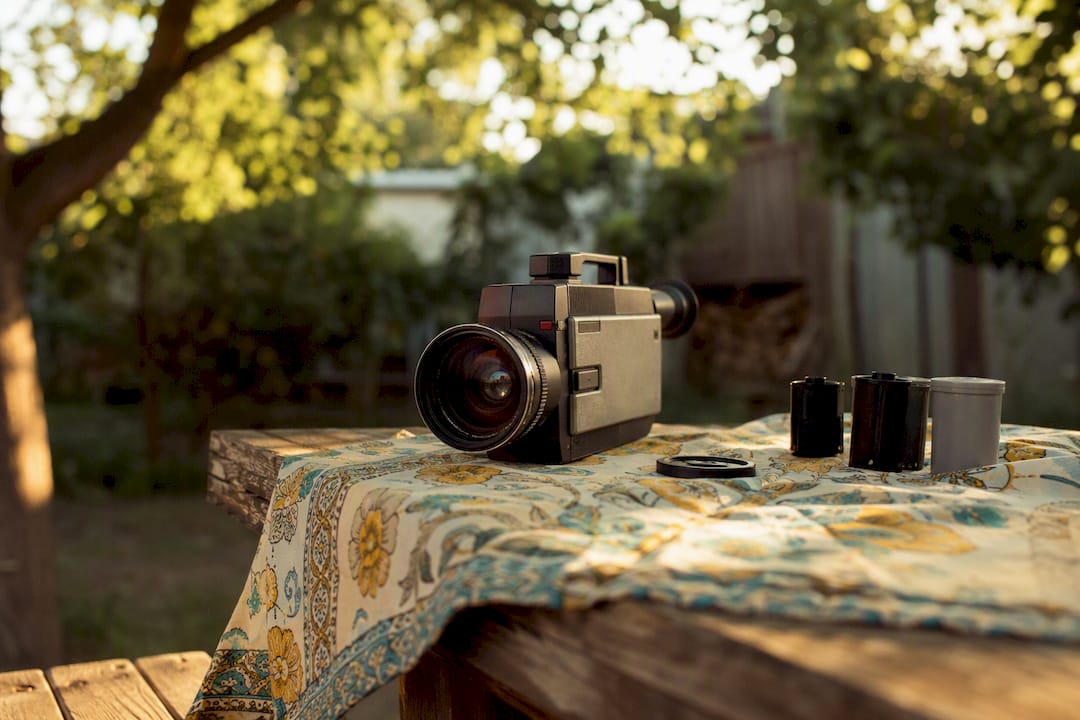
Shows the people, the workspace, and the day-to-day reality of the company. Best for recruitment, employer branding, and rebuilding trust after a rough public moment. Typical channel: Instagram, TikTok, and careers pages. This is also the cheapest format to produce well, since authentic behind-the-scenes footage often builds more trust than a high-polish commercial.
5. Product-adjacent story or soft integration
The product shows up, but it supports a larger story rather than driving it. A cooking brand might film a chef’s immigration story where the brand’s tools appear naturally in the kitchen. Best for staying visible without tipping into a sales pitch. Typical channel: streaming pre-roll, sponsored editorial video, or YouTube mid-roll.
6. Short-form social clips or episodic series
Vertical, fast-paced, usually under 60 seconds, often released as a recurring series rather than a one-off. Best for distribution-first strategies where reach and shareability matter more than depth. Typical channel: TikTok, Instagram Reels, and YouTube Shorts. Episodic social series have become one of the most common ways brands extend a single long-form idea across dozens of smaller, more discoverable pieces.
How to Plan and Produce Branded Video on a Realistic Budget
You don’t need a six-figure production budget to make something worth watching. What you need is a clear plan before anyone picks up a camera. Here’s the sequence that keeps a small team from wasting a shoot day.
- Define the single impression you want to shift. Not three goals, one. Do you want people to see you as more trustworthy, more human, or more relevant to a specific audience? Write that impression down before anything else.
- Build a one-page creative brief. Cover the core message, the emotional arc (where the story starts and where it lands), every planned brand touchpoint, target runtime, and the primary channel. If the brief can’t fit on one page, the idea isn’t focused enough yet.
- Choose your production path with a simple decision tree. A DIY phone shoot works when your story depends on authenticity over polish, your budget is near zero, and your subject is comfortable on camera. A short crew (one shooter, one editor) makes sense when you need better audio and lighting but the story is still simple. A scripted studio production is worth the cost only when the brand film is meant to anchor a major campaign for a year or more.
- Prioritize pacing and captions in editing. Most branded video gets watched with the sound off first. Captions aren’t optional. Match aspect ratio to the platform, apply your brand’s colors and typography consistently, and clear music rights before you fall in love with a track you can’t legally use.
- Plan the repurposing cuts before you shoot, not after. A five-minute brand film should yield three to six short clips for social, each built around one strong moment rather than a condensed version of the whole story.
Pro Tip: Shoot your B-roll and interview footage with repurposing in mind from the start. Wide shots that work in a five-minute film rarely translate to a vertical 15-second clip, so grab a few tight, vertical-friendly moments during the same shoot.
How to Measure Branded Video Success Without Chasing the Wrong Numbers
Conversion-focused metrics can be genuinely misleading here, because branded video isn’t designed to convert on first watch. Judging a brand film by click-through rate is like judging a novel by how many people bought a sequel the same afternoon.
The gold-standard method is a brand lift study, which compares exposed viewers against a control group to measure changes in awareness, recall, and sentiment, according to Wikipedia’s overview of branded content. This kind of measurement remains the clearest way to isolate what a video actually changed in someone’s head, since it accounts for people who would have felt positively about the brand anyway.
Most small teams can’t run a full brand lift study for every video. Lower-cost proxies still tell you something useful:
- View-through rate — did people watch to the end, or drop off in the first five seconds?
- Average watch time — a rough stand-in for how compelling the story actually is.
- Engagement rate — comments and shares tend to signal emotional resonance better than passive views.
- Simple survey pop-ups — a one-question poll (“Have you heard of us before?”) run before and after a campaign can approximate recall lift on a shoestring budget.
Set your thresholds before the campaign launches, not after you see the numbers. Decide what “working” looks like in advance: maybe that’s a 20 percent lift in average watch time versus your last three videos, or a measurable jump in unaided recall in a post-campaign survey. Tie whichever metric you pick to an actual business outcome, even an indirect one, like reduced customer acquisition cost over the following quarter, so the video’s impact doesn’t live in a vacuum separate from the rest of your marketing.
Short Examples and Three Prompts You Can Steal
A few compact examples show how format, goal, and channel line up in practice:
- A regional bank’s three-minute documentary on small business owners it financed built long-term trust and ran on YouTube and its homepage.
- A skincare brand’s customer testimonial series, shot handheld in real homes, drove social proof on its product pages and retargeting ads.
- A tech startup’s 30-second “day in the life” TikTok series supported recruiting more than sales, and it cost almost nothing to shoot.
- An outdoor gear company’s founder story, filmed in one afternoon with a single camera, worked because the founder’s voice carried the whole piece.
Three prompts to adapt for your own brand:
- The “one customer, one problem” prompt. Find a single customer with a specific, relatable problem your brand helped solve. Tell their story in under three minutes with no product shots until the final 20 seconds.
- The “typical day” prompt. Follow one employee through an ordinary workday. No script, just honest narration. Aim for 60 to 90 seconds for social.
- The “why we started” prompt. Two minutes, one founder, one camera, one honest answer to “why does this company exist?”
For runtime and captions, match the platform’s default behavior: assume sound-off viewing on social feeds, so lead with a visual hook and burn in captions from the first frame.
How Modern Browser Editors Make Branded Video Realistic for Small Teams
You don’t need a production house to make something that looks like one. What used to require a licensed editing suite and a steep learning curve now runs entirely in a browser, and that shift is what’s made narrative-driven branded video accessible to teams without agency budgets, an approach Shopify’s guide to brand video backs up directly.
A handful of feature categories account for most of that shift:
- No-download, browser-based editing that removes install time and hardware requirements entirely.
- Ready-made templates that give a rough cut a professional shape before you’ve touched a single clip.
- Transitions and visual effects libraries that used to require plugins or a paid effects suite.
- Brand presets for color and typography that keep every video, from the flagship film to the weekly social clip, visually consistent.
A workable workflow looks like this: write your one-page brief, choose a template that matches your format inside Kudoflix, drop in your footage, apply your brand’s color and font presets, then export straight to the aspect ratios each channel needs. The whole loop from brief to publish can happen in one afternoon rather than one month.
A small team with no formal production budget can still produce a customer story or a behind-the-scenes clip that looks intentional, not improvised, as long as the story is strong and the editing is consistent. The tools have caught up to the ambition; the story still has to do the work.
Getting Audience Targeting Right in Branded Video
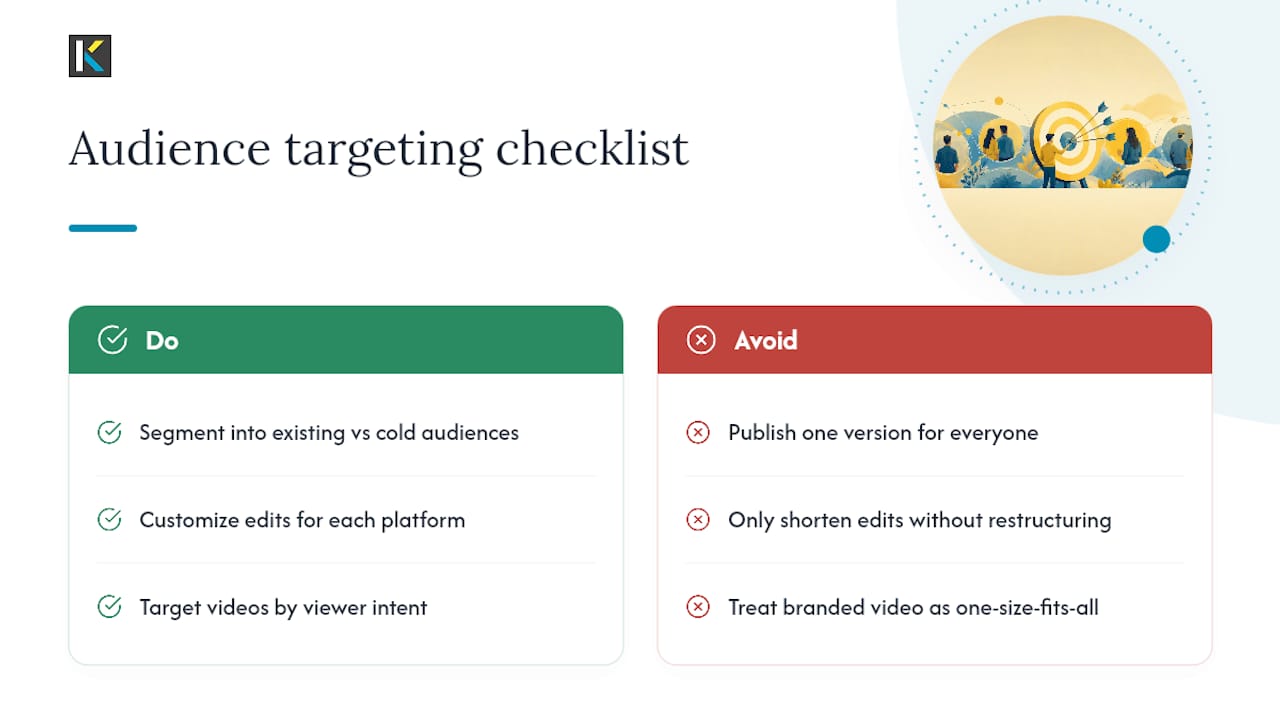
Branded video still needs an audience strategy, even though it isn’t chasing an immediate click. The mistake most teams make is producing one version of a story and hoping it lands the same way with every viewer, on every platform, at every stage of awareness.
Start by separating your audience into at least two groups: people who already know your brand and people who’ve never heard of you. A founder story aimed at existing customers can assume context and go deeper into nuance. The same story aimed at cold audiences on a discovery platform needs to establish who you are in the first five seconds or you’ll lose them before the point lands.
Platform also dictates customization. A three-minute documentary built for YouTube needs a completely different edit for TikTok, not just a shorter version, but a restructured one that leads with its strongest moment instead of building slowly to it. Captions, aspect ratio, and pacing all need to shift with the platform, not just the runtime.
Segment by intent where you can. A behind-the-scenes recruiting video and a customer testimonial aimed at buyers are solving different problems for different people, even if they share a production budget and a brand voice. Treating every branded video as one-size-fits-all is the single most common way teams waste a good story on the wrong audience.
Try a Faster Way to Produce Your Next Branded Video
Choosing the right format solves half the problem. Actually producing it without burning a week on software you’ve never used solves the other half. Kudoflix runs entirely in your browser, with no downloads and no install time, and it comes with a library of templates, transitions, and effects built specifically to help a founder story or a customer testimonial look intentional on the first cut.
If your team has been putting off branded video because the production side felt out of reach, Kudoflix’s online video editor is built to close that gap without a learning curve attached. Start with a template that matches your chosen format, swap in your own footage, and apply your brand’s colors before you export. The format decisions in this guide matter more than which button you press next, but having a fast, reliable editor means the format you choose is the one you can actually finish.
Why Most Advice on Branded Video Gets the Priority Order Wrong
Most guides on this topic spend their energy on production value, framing high-end cameras and elaborate crews as the barrier between an amateur video and a brand asset that actually works. That’s backward. The research on what makes branded content land points at story and restraint first, production quality a distant second.
The bigger failure I see is measurement, not manufacturing. Teams launch a branded video, watch the click-through rate underperform against last week’s product ad, and conclude the format failed. It didn’t fail. It got graded on a test it was never built to pass. A behind-the-scenes clip or a customer story needs to be judged on recall and sentiment, and most teams never set that expectation before they hit publish.
If you take one thing from this: pick your format based on the single impression you want to change, then commit to a real metric for that impression before production starts. The editing tool matters far less than that decision.
Sources
- What Is a Brand Video? 5 Real-World Brand Video Examples (2025) – Shopify
- Branded content – Wikipedia
- What is branded video content: A marketing manager’s guide
Recommended